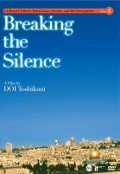
Introdaction
Palestine and Israel: Depicting Aggression and Occupation from Multiple Perspectives
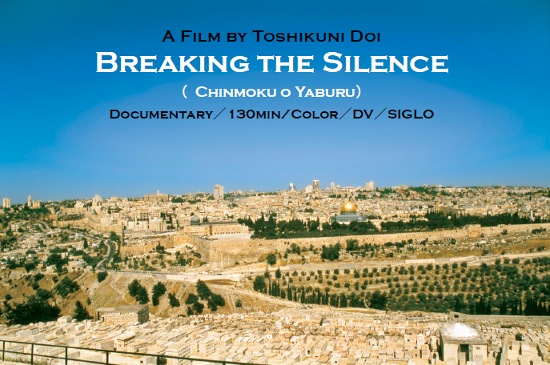
In the spring of 2002, during military operations in the West Bank, the Israeli army laidsiege to the Balata refugee camp and invaded the Jenin refugee camp. Over the course of twoweeks, the lives of Palestinians facing siege, destruction, and death were documented oncamera. Two years later, a group of young Israeli ex-soldiers and officers held a photoexhibition in Tel Aviv. Through the exhibition, entitled «Breaking the Silence," the ex-soldiersconfessed to acts of aggression during their duty in occupied territories, as members of what iscalled "the most moral army in the world.» Placed in positions of absolute authority in theoccupied territories, the young soldiers had increasingly lost their sense of humanity, ethics,and morality---they had become «monsters,» they said. Seeking to regain their own humanity,and hoping to contribute to the revival of an Israel itself afflicted by the occupation, they haddecided to speak out.
Director Doi Toshikuni has been covering Israel and Palestine as a journalist for more thantwenty years. This feature-length documentary was crafted from several hundred hours offootage. It depicts, through the lives of the participants, both the devastation visited upon thePalestinian people by the Israeli armed forces and the effects on Israeli soldiers of participatingin the structural violence known as occupation. Palestinians, resolutely surviving what oftenseems to be hopeless oppression, and young Israelis, persisting in speaking out despiteaccusations of betraying their country. The film transcends the frame of the Palestine-Israelproblem to address, from multiple perspectives, a subject of universal significance.
Director’s Statement
When addressing Israeli aggression and occupation, reporting solely on the damage inflictedon Palestinians tells but one aspect of the story. I believe it is only through conveying themotives, action principles, and psychology of the side that engages in aggression andoccupation that a picture of that reality emerges with depth and complexity.
This is the reason that, after more than twenty years of reporting on Palestine, I decided toexamine the psychology of the Israeli soldiers who carry out the aggression and occupation.This difficult task was only possible because of the courage of the former soldiers of Breakingthe Silence.
However, their story is not something foreign to us Japanese. The testimony of the formerIsraeli soldiers provides a valuable lens for us to reexamine ourselves as a people with ahistory of aggression, who to this day live with the unresolved legacy of the past. When theaction and words of these former Israeli soldiers is overlaid on the behavior of the formerJapanese soldiers, they are not simply addressing the problems of a far-off land but insteadproviding a mirror that reflects our own image as a people that once invaded and occupiedother countries. This is the meaning for me, as a Japanese, of making a film about theexperiences of former Israeli soldiers.
But this film will undoubtedly reach beyond my personal motivations. Americans will hearechoes of veterans of the wars in Vietnam and Iraq in the Israeli experience, Germans will seeconnections to the soldiers they have sent to fight in Afghanistan. This is the power anduniversality of the words of the former soldiers of Breaking the Silence.
About Breaking the Silence (NGO)
Breaking the Silence is an NGO that was established by former Israeli soldiers who haveexperienced duty in the occupied territories. It is comprised mostly of young men in their 20s,including founder and spokesman Yehuda Shaul. Through testimony about acts of aggressionin the territories, such as physical abuse, looting, and the killing of civilians, the group asksIsraelis to face realities of the occupation that have long been draped in silence.
The group held a photo exhibition, entitled «Breaking the Silence: Fighters Tell aboutHebron,» in Tel Aviv in June 2004. With photographs taken in the occupied territories andvideo testimony from 60 soldiers, the exhibition caused a sensation within Israel.
Since then, the group has gathered several hundred video testimonies and continues to demandaccountability for Israel’s military actions in the occupied territories through the media, publicappearances, a website, and numerous publications.
Film Data
- Genre: Documentary
- Format: DVCAM / 130min / Color
- Year of Production: 2009
- Production Company: Siglo, Ltd.
- Director: Toshikuni Doi
- Producers: Tetsujiro Yamagami
About "Unheard Voices"
«Unheard Voices»
Palestinians, Israelis, and the Occupation
A Film by Toshikuni Doi
Part 1: Gaza
Part 2: Encroachment
Part 3: Shalom, Salaam
Part 4: Breaking the Silence
Part 1: Gaza
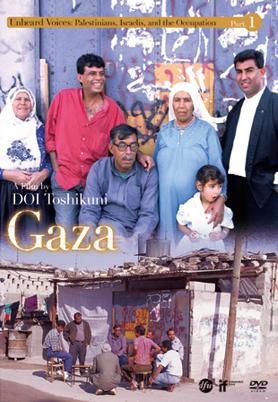
Beginning just after the Oslo Accords were signed in September 1993, a family in the largest refugee camp in the Gaza Strip is followed over the course of six years. Existing in poverty but sustained by love, the family lives at the mercy of the turbulent political situation. While the peace accord raised hopes of liberation from long years of occupation and the creation of an independent Palestinian state, reality shatters these dreams, and the people of Gaza are torn between optimism and despair. Meanwhile, the film brings into sharp focus the reality of Israel’s «legalized occupation" in the context of the shattered peace, and the corruption of a Palestinian National Authority that has lost its vision of "true liberation» for the Palestinian people.
The Oslo Accords were signed between Israel and Palestinian representatives in September 1993. Will this accord bring true peace to the Palestinian people, living under occupation? In pursuit of an answer, director Doi Toshikuni began living with a family in Jabalya, the largest refugee camp in the Gaza Strip. It is a poor household, where one of the sons works across the border in Israel to provide support for the other 15 members of the family. But they are sustained by deep family love and by the dense collective consciousness of their fellow Palestinians. The films follows the changes the family undergoes over the course of six years, to depict the lives and sentiments of the Palestinian people as they are rocked by dramatic changes in political conditions and sway between two poles: hope for liberation from long years of occupation and fulfillment of the dream of an independent state, and despair, as reality intercedes to dash these dreams.
Even after the peace accord, Israel continues to exercise the power of life or death over Palestinian lives, by imposing border blockades and increasing economic dependency. The reality and structure of the resulting impoverishment of Gaza is established through the testimony of people in range of situations. It also becomes clear that the assistance provided by Islamist organizations to increasingly desperate Gazans serves to broaden the influence of these organizations.
Israel was not alone in causing the collapse of the peace accord. When Yasser Arafat’s PLO enters Gaza and set up the Palestinian National Authority, it is greeted enthusiastically by residents as a force of liberation from the occupation. But this government too, through the corruption of its leaders and its exercise of authoritarian, antidemocratic state power, soon engenders popular despair and opposition. The local leader Hayder Abdel Shafi, who enjoys widespread support and deep trust among Gazans, becomes the voice of this despair and criticism. Aiming for the democratization of Palestinian society, he runs in the first election for the Legislative Council, but he soon loses faith in the autocratic government and chooses to resign.
This film, from the micro perspective of one family’s life and the macro perspective of the economic structure and political developments, sheds light on the context in which the peace accord collapsed.
Part 2: Encroachment
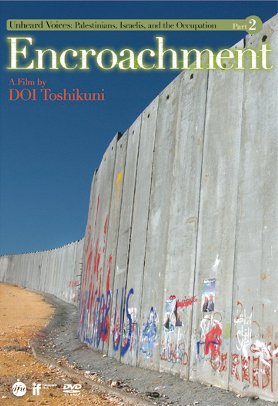
The homes of Palestinian residents in East Jerusalem are demolished one after another. A family whose newly built home was bulldozed by city authorities and is now forced to live in a tent is followed over the course of four years. Interviews with city officials and concerned citizens illuminate the government’s strategy for the «Israelification» of Jerusalem.
At the same time, the film depicts the struggles of Palestinian farmers cut off from their farmland by the «separation wall,» and the economic strangulation of a Palestinian town severed from the surrounding society by the wall. The film exposes the reality that the wall does not simply aim to protect Israelis from suicide bombers, but is also a means of eroding the foundation for building a Palestinian state.
The homes of Palestinian residents in East Jerusalem are demolished one after another. A family whose newly built home was bulldozed by city authorities and is now forced to live in a tent is followed over the course of four years. While anti-Israeli feelings deepen among residents whose houses are unjustly demolished, they remain dependent on the Israeli economy for their livelihood. The film portrays Palestinians in East Jerusalem agonizing over this dilemma.
It becomes clear through interviews with government officials and experts that the demolition of Palestinian homes is part of a consistent policy to limit the Palestinian population and maintain a Jewish majority in the capital city of Jerusalem.
Meanwhile, Israel is building the «separation wall» in the West Bank, in the name of protecting its citizens from suicide bombers. In the Palestinian village of Jayyous, near the border with Israel (the Green Line established at the end of the 1967 War), 87% of the residents' farmland has been severed from the village by the wall. The farmers need permits from Israeli authorities to get to their own land, and they cannot farm without passing through an Israeli checkpoint every morning and evening. With the separation wall, Israel has seized additional land and water resources. Palestinians claim this encroachment on the basis of their livelihood is part of a conscious policy to pressure the residents to move away.
The commercial city of Qalqilyah, which faces the border, has been surrounded by the wall on three sides, closing it off from the outside world. As a result, it has lost its customer base of Israeli Arabs and people from nearby villages, and it is facing economic suffocation. The residents have lost their means of livelihood and have been indirectly forced to move.
Interviews with Israeli scholars confirm that the wall is not simply intended to protect Israel’s security, but is also a means of eroding the foundation for building a Palestinian state.
Part 3: Shalom, Salaam
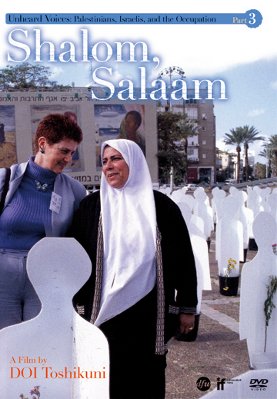
A university student in the Gaza Strip engages in a suicide attack. What drove him to this act was the pent-up anger and despair of the Palestinian people toward daily attacks, house demolitions, and killings by the Israeli army. Meanwhile, a female Israeli border police officer is severely burned in a suicide attack on a bus. The film follows her lengthy recuperation in a hospital, supported by her family, and depicts the victims' festering distrust and anger toward Palestinians. Elsewhere, the parents of a 15-year old girl killed in a suicide attack work as peace activists, shouldering their daughter’s strong desire for peace. They participate in a dialogue between bereaved Israeli and Palestinian families, but the gulf between the two groups' visions of «peace» proves difficult to bridge.
After the Second Intifada began in 2000, many houses were demolished in the city of Rafah, on the border between Gaza and Egypt. Following the life of one of these families, the film depicts the agony of residents who have lost their homes.
The Jewish residents of a settlement in the Gaza live in fear of Palestinian attacks. Meanwhile, homes of the residents of the neighboring refugee camp are demolished in succession, in the name of protecting the settlers. One of those residents, an honor student at a Gaza university, kills himself in a bomb attack. Interviews with his family and friends, along with his will, establish that he was driven by a desire for revenge on Israel. It becomes clear from their testimony that he had witnessed the pent-up anger and despair of people who are subjected to daily attacks by the Israeli army, whose homes are demolished and whose lives are threatened.
In Israel, Palestinian suicide bombings continue. In March 1996, a female border police officer was severely injured in a bus attack. The film follows her lengthy recuperation in a hospital, supported by her family, and depicts the victims' festering distrust and anger toward Palestinians.
Meanwhile, the parents of a 15-year old girl killed around the same time in a suicide attack in downtown Tel Aviv, read the poetry she has left behind and learn of her dreams: coexistence with Palestinians and a plea for peace. The parents shoulder their daughter’s vision and become involved in a peace movement, seeking coexistence with Palestinians.
As one of their activities, they participate in a dialogue with Palestinian families who have lost children to Israeli attacks. The Palestinians have traveled from the Gaza to Tel Aviv to meet bereaved Israeli families. The two sides came together with the shared goal of going beyond the enmity of losing their children to seek peace, but there is a gaping chasm between their views of the situation. The Israelis want an end to the fighting with Palestinians and to live calm, secure lives. The Palestinians want a life without occupation, where they are free to move about at will, where they can find work, and where they can raise their children in safety. They all hope for peace, but the gap between the two groups' visions of «peace» proves difficult to bridge.
Part 4: Breaking the Silence
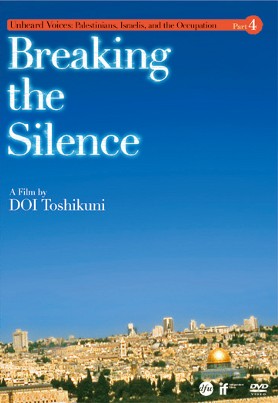
In the spring of 2002, the Israeli army surrounded and attacked the Balata refugee camp. The camera follows residents living in a state of terror and records their lives and feelings. The desperate situation in the Jenin refugee camp after the death and destruction of Israel’s violent attack is also depicted, conveying the reality of «occupation.» Meanwhile, former Israeli officers and soldiers in a group called Breaking the Silence testify to the numbing of their sense of morality and ethics during service in the occupied territories, and the dread they feel over the loss of their humanity. They speak out from concern that the moral foundations of Israeli society and the state are at risk. The soldiers' testimony and the ambivalence of their families reveal the deep shadows that the occupation has cast on Israeli society.
In the spring of 2002, after a suicide bombing attack on a city in Israel, the Israeli army reoccupied major cities in the West Bank. During the course of this campaign, they surrounded and attacked the Balata refugee camp (near Nablus) and invaded the Jenin refugee camp. Doi entered the Balata camp alone just before the Israeli army sealed it off, and thoroughly documented the residents' lives and reactions over the following two weeks.
He then entered the Jenin camp, ravaged by a fierce Israeli attack, immediately after the Israeli siege was lifted, and vividly recorded the aftermath of carnage and destruction. In particular, he documented the physical and psychological suffering inflicted on two men and their families who survived the attack, then returned five years later for a follow-up report. Using the experiences of the Balata and Jenin refugee camps as examples, the film depicts the reality that the occupation has brought to the Palestinian people, as well as their tough determination to survive in the midst of these desperate conditions.
Meanwhile, in Israel a year after the reoccupation of the West Bank, a group of Israeli soldiers who served in the occupied territories held a photo exhibition that detailed their own acts of aggression, causing a major stir in Israeli society. That group of soldiers is called Breaking the Silence. Four of the group’s principal members describe how, in exercising absolute authority over Palestinians in the occupied territories, they had become aggressors, losing their sense of humanity, morality, and ethics, and turning into «monsters». This tendency has spread throughout Israeli society, they argue, increasing violence and eroding morality. Fully aware that some will accuse them of stabbing their country in the back, they have taken a stand in order to restore their own humanity and in the hopes that it will help revive Israel from the distress the occupation has caused Israel itself. Their voices transcend the framework of the Israel-Palestine problem and confront us with a message of universal significance.
Contact
siglo, Ltd.
siglo@cine.co.jp
